
Blog November

An interview on the news triggered me to write this blog. An elderly woman was interviewed because of delayed knee surgergy. She was very emotional about it, sitting at home for almost a year. She was mainly blaming others, COVID-19 and low capacity in hospitals. Normally I would feel sorry for her, but this time I felt sadness and even some anger. In my opinion she had several choices. First, she was quite overweight and could have used her time at home to lose some weight. Second, she could have made contact with her body, in this case her knees, to find out what her body is trying to tell her. And third, she could blame others for what happens in her life. She chose the third option. And I’m not judging her. We all have free will to choose how we want to deal with discomfort and despair. What made me sad is that so many of us are not aware how capable we are to heal ourselves when we listen carefully to our body. And it made me angry that the news only shows us one side of the story without placing any responsibility on the person herself. It was only emphasized what went wrong in her outer world. But what if the outer world mirrors our inner world? What if the woman could have learned an important inner lesson from the fact that her knee surgery was delayed? Maybe she could have learned how capable she is to do a lot herself in the meantime? Maybe she could have found out what changes she needs in her life. Simply by listening carefully to her body. Because when we are able to do so, we will learn that in many cases we are capable to heal ourselves or prevent ourselves from worse illnesses.
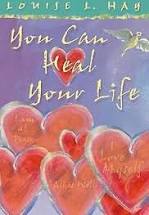
During the many lockdowns of COVID-19 I learned by experience how incredibly powerful we are. I used this time in isolation to look closer at stubborn skin problems. Before, I had tried many treatments for more than six months, but nothing helped, it only became worse. Big wounds showed up everywhere: on both my lower legs, my lower arms and thumbs. More and more I found out that it was not only a physical problem, I somehow knew that there was more behind it. So I took a closer look by reading the book “You can heal your life” of Louise L. Hay again. She writes about the probable causes behind physical problems and the affirmations to use to support our healing process. With regard to the skin she writes that skin problems often mean that we feel threatened in our individuality. We think others have power over us. One of the fastest ways to cure skin problems is to nourish ourselves by saying “I love myself and I appreciate myself” hundreds of times a day. I started doing this and after one or two months all the wounds were gone. As long as we believe that those things are not possible or that it is coincidence, nothing will happen. This is exactly what needs to be changed in our thought patterns: to trust and believe that we are so much more powerful, worthy and capable than we could have ever imagined.
With all of this I’m not saying that we don’t need the regular health care systems. I have a lot of respect for all the doctors and nurses who are facing many difficulties in this time of COVID-19. What I’m saying is that we can do so much more ourselves to prevent illnesses from occuring or to help heal ourselves when something physically, emotionally or mentally shows up. When more of us will find confidence in our own strength and take time to listen to our body, in my opinion we will support doctors, nurses and caretakers to heal the persons that need it the most.
Blog September
My first blog ever. Quite scary but also exciting. Scary because I didn’t chose the most easy topic of duality versus unity. Excited because I give a voice to my “new” me. I always wondered why I chose to become a military and why I stayed for twenty-six years. Last week, while working on finishing my website and reading the news about Afghanistan, I felt a connection between the “new” me, writing about love and wholeness, and the “old” military me, aiming for peace in the world. At the age of eighteen I chose to be a military from this idealistic point of view. I think my idealistic self already arose when I was eight years old, in 1982. Together with my parents I was demonstrating against the placing of nuclear bombs in The Netherlands. I remember as a child I was terrified to hear that only pushing one button could launch a bomb. So, being idealistic and wanting to bring peace to the world, I became an officer in the navy in 1992. But after two antipiracy missions around the Gulf of Aden and one mission to Mali I slowly lost my idealistic point of view of being able to save the world from war and hate as a military.

Where I may have been naieve and hoped we could really make a difference, I mainly saw that our military missions were about own gain for political, economic and/or safety reasons for our own countries. And mainly seen from our Western perspective. I’m not judging this, it is what it is in many cases. Of course there are a lot of good initiatives and many individuals trying to make a difference, but the example of Afghanistan shows us that maybe we also have to look at wars from another, more holistic perspective.
So often we look at things from a dualistic perspective. Black or white, light or dark, good or bad, right or wrong. But what if there is no right or wrong? What if right and wrong are just concepts that we need to bring ourselves and the world back to unity? What if something feels completely “right” for me but not for others? What if we would focus more on understanding what is behind hate and war? To understand why people become terrorists or pirates instead of judging them for their acts? To see everything as a whole, using a more heart centred way of looking at things? What if radicalization often starts with a lack of food, education, income and/or a safe and loving environment? From my mission in Mali I know that many young men join terrorist groups for the money, because they have nothing left. No food, no home, no foundation to build their lives on. Even water is very scarce.

If we keep focusing on the “wrong” side of terrorism, we only make the “wrong” side grow. This is what is reflected in the world outside of us nowadays. What if we would stop putting billions of euros into new weapons and instead put more money into understanding other people’s motivations to fight for something they believe in? What if we would give them a voice? If we learn to see that not only persons but also situations in the world are mirroring us how we are using the world and how we are dealing with war and disasters, we can also learn how to deal with all of these things in a different, more heart centred way. Less judging on what is right or wrong and more understanding towards all sides of a story. It starts with ourselves. If we find the wholeness within, accepting all parts of us, we will slowly see wholeness outside of us. First in our immediate vicinity. And the more people in the world find wholeness within themselves, the more it will be reflected in today’s world too.
It’s not the size of a country’s weapons and power that brings peace to the world, but the extent to which we are whole as individuals.
An inspiring YouTube video which I think is worth sharing here is a TedTalk of Gabor Maté of 2012: “The Power of Addiction and the Addiction of Power”.